10 Print "Hello"
That line typed on an Apple II computer in my Dad’s office in the fourth grade got me hooked on computer programming, an addiction I never outgrew.
Over the years, I’ve had the pleasure of owning, using, or programming on many of Steve Jobs’s creations, including Apple II+, Macintosh IIcx, Power Mac 7100, Newton, NeXT, Powerbook, Macbook Pro, and iPhone. I’ve been a consistent Mac in the Mac-vs-PC battle since 1984 (though I admit to a brief affair in 1998: it didn’t mean anything, Steve, I swear!). Jobs himself ignited an us-versus-them fire, which smolders on today in Apple’s John Hodgman-as-PC ads, back in 1985 with one of his best quotes:
Playboy: Are you saying that the people who made PCjr don’t have … pride in [their] product?
[Jobs:] “If they did, they wouldn’t have made the PCjr.†[Playboy, Feb. 1, 1985]
Around that time, my friends and I had a running joke: “I got a PCjr,” one of us would say; “you’re going straight to hell, kid,” the other would shoot back.
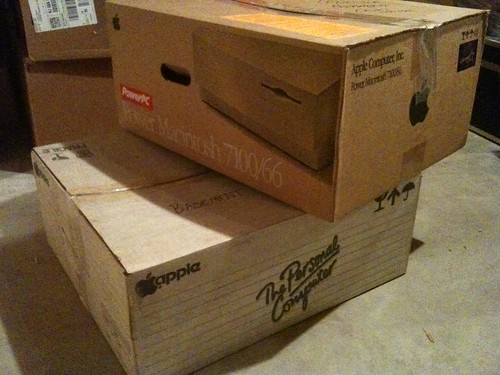
Buried treasure: Old Apple II and Power Macintosh computers, waiting to be dusted off… someday
My wife and kids (ages 7 and 4) are more recent converts, owning a Duo, an iPhone, an iPad, and two iPod Touches among them.
I’ve owned Apple stock since about 1997, my single best investment, increasing 4,460 percent. (Priceline is my second best, gaining 3,990%.)
Like Lance, I’ll never forget where I was when I learned that Steve Jobs had died. Steven Colbert told me. Live. After a hilarious taping of the Colbert Report and four performances by the artist formerly known as Mos Def (apparently a perfectionist: who knew?), Colbert ended by balancing his iPhone on his desk, letting it fall over, then telling us, “Steve Jobs died. Sorry to be the one to tell you.” To say the mood of the audience changed instantly would be an understatement. Smiling faces turned down. Cries of anguish and “oh no!” rang out from nearly everyone in the audience, a mark of how Jobs’s influence and name recognition has grown from tech hero to global cultural icon. (Colbert gave Jobs a proper tribute the next day.)
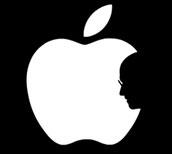
There’s a thread in our office about the extent to which perceived success or failure at the CEO level is a fooled-by-randomness trick of the mind. But there are some examples where even the strongest skeptic must admit that an organization’s success is almost surely owed to the exceptional greatness of a single individual. Warren Buffet and Coach K come to (my) mind. But Steve Jobs must be the prime example. As if ushering in the era of personal computing and computer-animated movies was not enough, Jobs continued to outdo himself year after year, with iPod, iTunes, iPhone, and, barely a year ago, iPad. Sadly, or maybe purposefully, Jobs seemed to hit his stride just as he died. As a long-time disciple of Jobs, I’m amazed at the amount of focus in his obituaries spent on gadgets he created in the last ten years.
Jobs famously advised not to spend too much time celebrating success.
I think if you do something and it turns out pretty good, then you should go do something else wonderful, not dwell on it for too long. Just figure out what’s next.
—NBC Nightly News, 2006
Those were not empty words for Jobs: it’s how he lived his own life and how he squeezed so much out of the 56 short years he was given. The early storyline of Apple pegged Steve Wozniak as the brains and Jobs as the lucky business-minded sidekick. It turns out that Jobs was way more exceptional than the 1990s nerderati — who like me relate more to Woz — gave him credit for. Jobs had the brains, the vision, and the charisma in a combination so rare I’m not the only one who can’t think of another human alive who compares. To get a taste, read or watch Jobs’s Stanford commencement speech: it’s truly brilliant, inspiring, and one of the best ways you can spend the next few minutes of your time.
To the ultimate hacker painter, the first last analog, the nerdiest salesman, the studliest genius, the most productive perfectionist, the most detail-oriented visionary, and a personal hero:
20 Print "Goodbye"